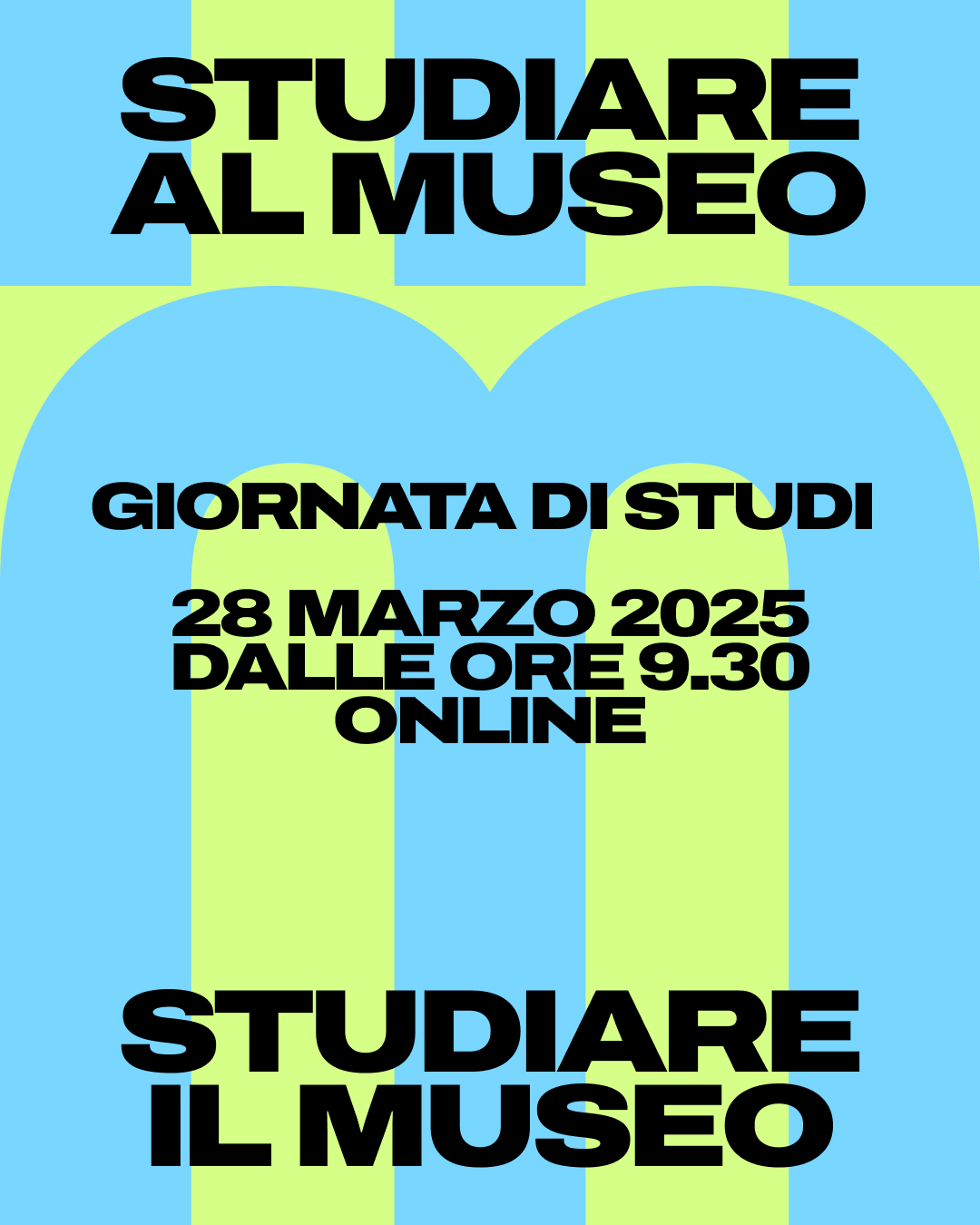
Friday 28 March 2025, from 9.30am, saw the fifth edition of Studiare al Museo/Studiare il Museo, the online Study Day organised every spring by AMACI – Associazione dei Musei d’Arte Contemporanea Italiani, with the support of the Directorate-General for Contemporary Creativity of the Ministry of Culture.
Studiare al Museo/Studiare il Museo, curated by Elisabetta Barisoni, Head of the Museums Area at the Fondazione Musei Civici di Venezia and in charge of Ca’ Pesaro – International Gallery of Modern Art and the Fortuny Museum, and Emma Zanella, Director of MA*GA, offered an important opportunity to reflect on the profound changes affecting contemporary art museums, their mission and their operational methods in today’s context.
The museum is a place of complexity: it collects, conserves, interprets and exhibits cultural heritage, both material and immaterial, while also playing a crucial role in research and training through ongoing dialogue with universities, academies, AFAM institutions (higher education institutes for art, music and dance), artists, and researchers.
Within these networks of relationships, the museum is itself an object of study — for the heritage it holds, for the outreach and educational projects that promote public engagement, and, not least, for the artistic practices that place the museum at the centre of their work. This state of affairs is also reflected in the position of artists, who increasingly present themselves as researchers on contemporary themes, heritage, education and relationships, going so far as to enter different areas of museum practice to reread and reframe them in unconventional and non-traditional ways.
Building on these premises, the fifth AMACI Study Day aims to encourage dialogue among experts in the field, with the goal of identifying good practices that recognise the educational role of museums and strengthen their synergies with the Ministry of Culture, the Ministry of Education and Merit, universities, AFAM institutes and other institutions that see museums as strategic partners for education and advanced training.
The three planned sessions were introduced by a preliminary survey analysing the state of AMACI museums in relation to the proposed themes. The panels brought together professionals from AMACI museums, sector experts, institutional representatives from the Ministry of Culture and the Ministry of Education and Merit, as well as figures from the academic and artistic worlds.
Now in its fifth edition, the Study Day was preceded in 2024 by Il Tempo del Museo. Il museo d’arte contemporanea presidio di complessità, curated by AMACI’s Executive Board — a reflection on the dichotomy, whether real or apparent, that emerges in the vision of museums, conceived both as places for the development of thought, debate and discussion, and as places of entertainment. The third edition, in 2023, I Musei d’arte contemporanea e lo sviluppo sostenibile: una pratica necessaria, curated by Marcella Beccaria, was dedicated to the role of museums and cultural institutions in achieving more sustainable global development. The second edition, held in 2022, Cogli l’attimo, Carpe diem, Seize the Day, also curated by Marcella Beccaria, reflected on the art of performance and its presence in Italian museum collections and archives. Finally, the first edition, I Musei d’arte contemporanea e il diritto d’autore. Una prospettiva di collaborazione sull’esperienza del Progetto RAAM, curated by lawyer Andrea Pizzi in 2021, brought together for the first time, around a single table, those responsible for protecting creative works and the institutions that — for the purposes of study, research, and the dissemination and promotion of knowledge of our cultural heritage — require rights of use for them.
The Study Day was opened by Angelo Piero Cappello, Director-General for Contemporary Creativity at the Ministry of Culture, and Lorenzo Balbi, President of AMACI, and unfolded across three in-depth sessions dedicated to The Museum as an Educational Institution, The Museum and the Academic World, and The Museum, Artists.
Full italian recording available at the bottom of the page.