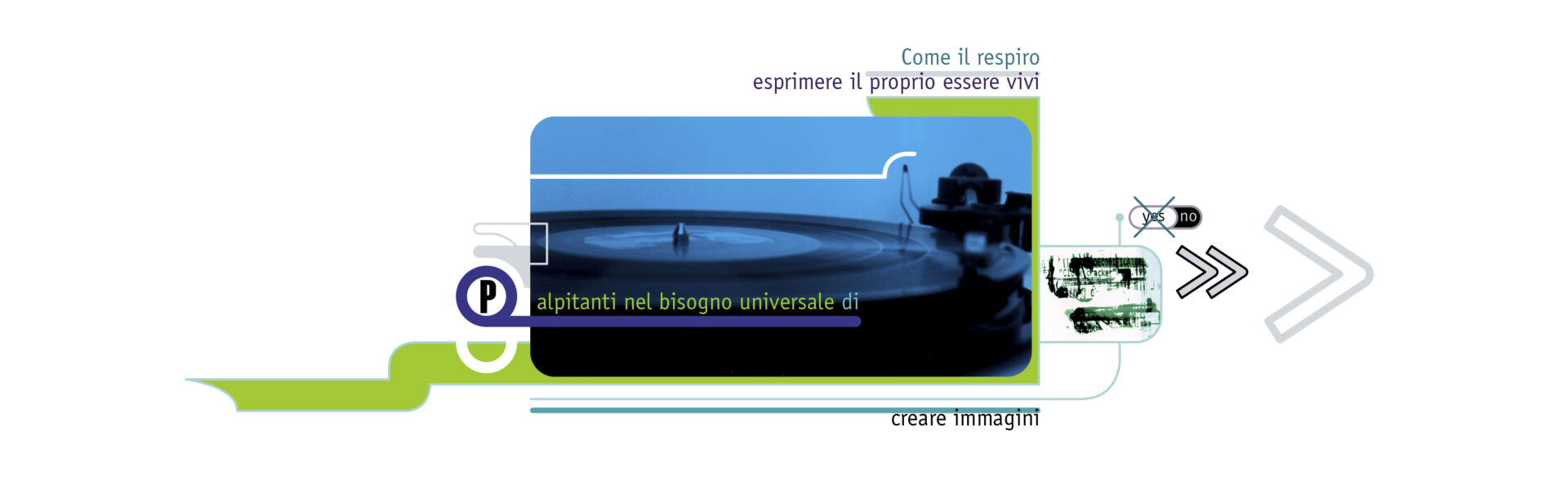
Life does not unfold according to an orderly sequence of events, nor does it necessarily follow the timelines and paths imagined for the future. Sometimes, a single instant is enough to change the meaning of things, call certainties into question, and transform what once seemed assured into something suddenly precious. It is in the unpredictable nature of existence that the miracle of instant life reveals itself: the possibility of recognising the value of time and choosing how to inhabit it.
The Miracle of Instant Life (A Fairy Tale Without Lies) takes shape around a personal library of more than 300 volumes devoted to visual design and visual communication, with a particular focus on graphic design. More than a collection of books, it is the testimony of an intellectual and professional journey, nurtured by curiosity, study, and the conviction that designing means taking responsibility for one’s ideas.
In graphic design, form is not merely a container for a message, but an integral part of its meaning, a tool for knowledge and a driving force behind cultural relationships. Every project emerges from a process in which intuition, method, and awareness transform an intention into an act of communication. Its value lies as much in the result as in the choices, intentions, and human relationships that made it possible.
These books embody this vision. They are tools for work and discovery, but also tangible traces of time devoted to research, experimentation, and the development of a personal perspective on the world. Each volume evokes a question, an intuition, a desire to understand. The library thus becomes the silent portrait of a passion and a place where knowledge can evolve from an individual experience into a shared heritage.
Every library is also a measure of time: the time needed to read, explore, and experiment, which can acquire new and unexpected meanings. If the future remains unpredictable, the present is the only space in which we can act. To postpone a desire is to entrust it to a time that does not entirely belong to us; to acknowledge it is to take responsibility for making it possible.
Perhaps this is the fairy tale without lies evoked by the title: not a reassuring narrative, but an awareness of the fragility of existence. Not everything depends on individual will, and not every desire can be fulfilled. Yet what we can choose should not be endlessly left to chance or to a future imagined as inexhaustible. No one can live the time available to us on our behalf, or give shape to the desires we recognise as truly our own.