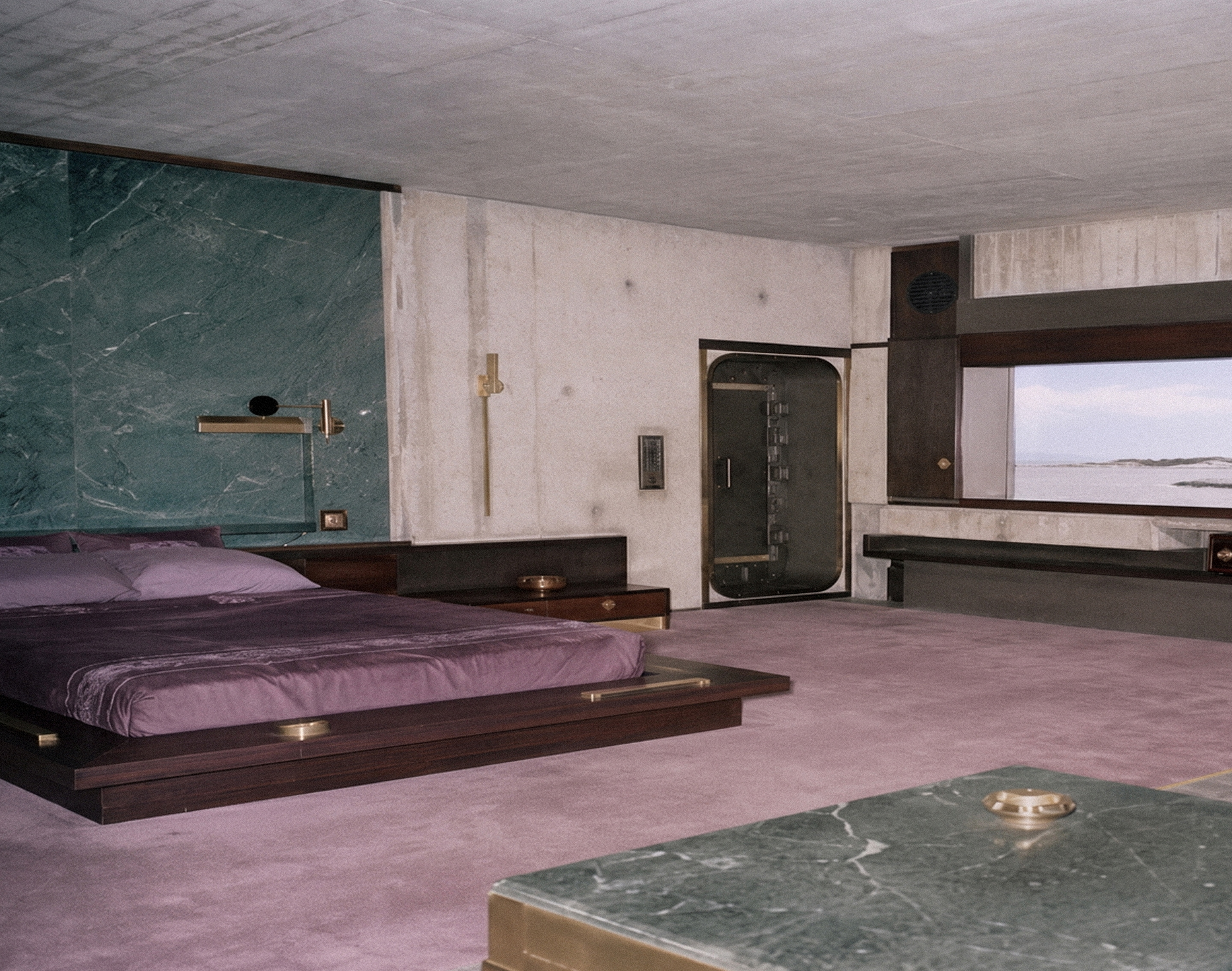
The Adolfo Pini Foundation is pleased to invite the public to a guided tour led by curator Cecilia Guida, held as part of the solo exhibition by Francesca Pionati and Tommaso Arnaldi, the winning duo of the second edition of the Pini Art Prize – Visual Arts section.
The Fondazione Adolfo Pini is pleased to invite the public to two guided tours with curator Cecilia Guida, held in conjunction with the solo exhibition by the duo selected as the winner of the second edition of the Pini Art Prize – Visual Arts section, Francesca Pionati and Tommaso Arnaldi.
The guided tours will offer an opportunity to explore the themes and works presented in HARD ASSETS, the exhibition curated by Cecilia Guida and presented in the Foundation’s ground-floor exhibition space.
—
The exhibition takes the bunker as its starting point: an architectural form that, in the European context, now survives more as a historical trace than as a functional structure. Starting from this persistent presence in the landscape, the project explores the relationship between domestic space and architecture, examining the gap between the bunker as a physical space and as a cultural imaginary.
Through sculpture, installation, and immersive environments, Pionati and Arnaldi investigate the ways in which spaces shape our perception of security, intimacy, and belonging. By bringing everyday objects, camouflaged architectures, and AI-generated images into dialogue, the exhibition traces a path across the boundaries between shelter and domesticity, history and imagination. What emerges is a reflection on the ways in which architecture continues to shape cultural imaginaries and everyday experience.
Through video, sculpture, installation, and publishing, Pionati and Arnaldi explore the aesthetic and political entanglements between urban infrastructures and systems of governance, particularly within the Italian context and in relation to the state of exception and technologies of warfare. Their research-based practice focuses on informal architectural interventions as sites of potential autonomy within regulated systems, as well as on domestic environments, exploring the affective politics embedded in these architectures.