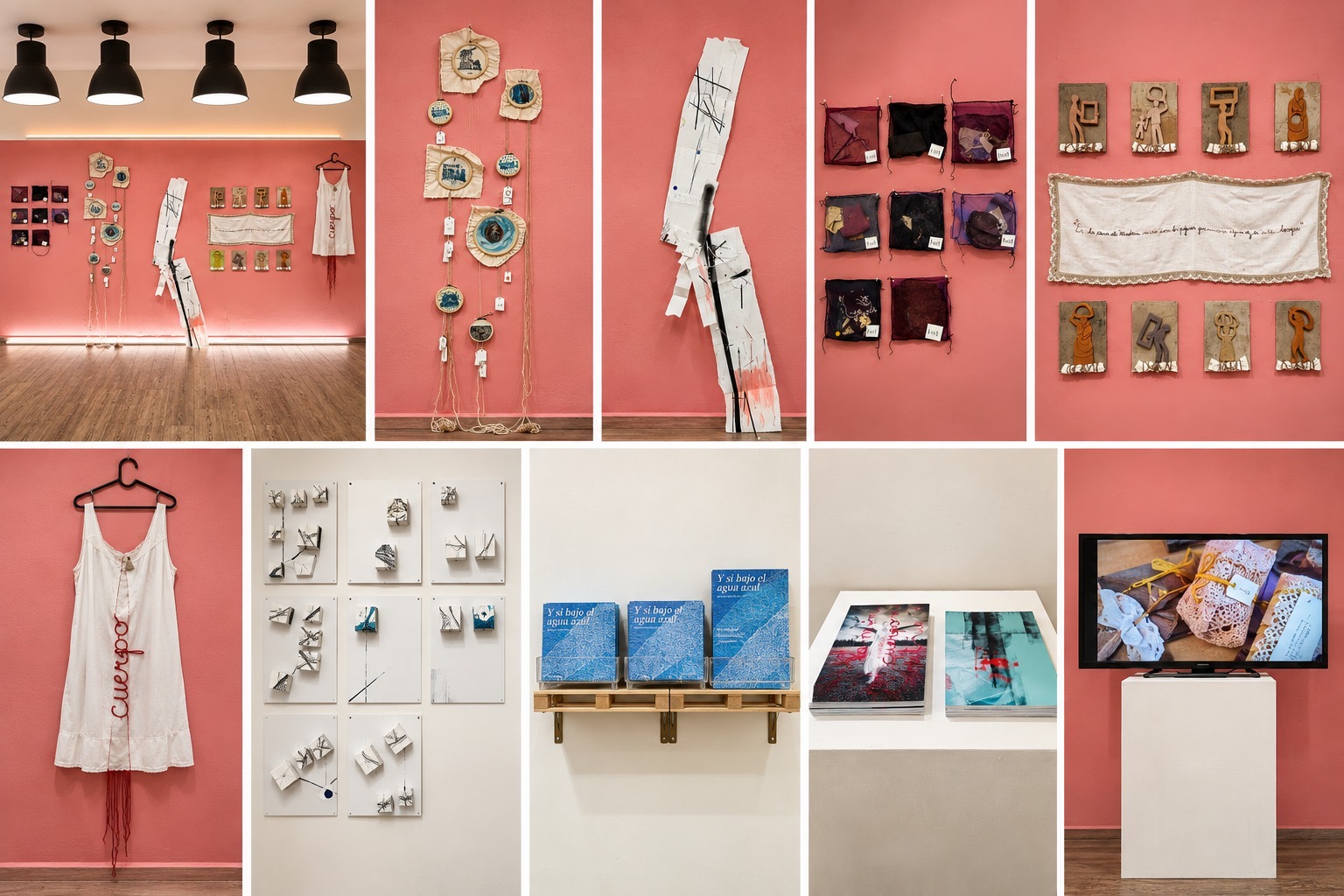
A game establishes rules, organizes spaces, and proposes a relationship among those who take part in it. But it also allows those rules to be altered, combinations to be experimented with, certainties to be questioned, and unexpected meanings to emerge. It is from this condition — between structure and chance, memory and invention — that Juegos de Salón, the new project by the collective Línea de Borde, takes shape.
Formed in Santiago de Chile in the late 1990s, Línea de Borde developed from the outset a collective practice concerned with displacement, decentering, and the relationships between center and periphery, gender and territory. After reuniting in 2021, two decades later and from different geographical locations — Santiago, Cochabamba, Buenos Aires, and Barcelona — the collective resumed its shared practice, incorporating the personal, social, and technological transformations of the present. Distance thus ceased to be merely a difficulty, becoming a methodology in its own right: an archive, a means of circulation, a space for encounter, and a mode of collective production.
Juegos de Salón continues this trajectory from a deliberately intimate scale. The living room can be the domestic space where we converse and play, but also the social space where we gather, where images circulate, and where certain conventions are reproduced. The artists shift and rework codes associated with entertainment — the puzzle, word searches, research, ordering, repetition — transforming them into devices for inquiry. Words, images, and objects are folded, fragmented, concealed, recombined, and circulated; fabrics, paper, ceramics, photographs, embroidery, digital archives, and organic materials activate different forms of memory.