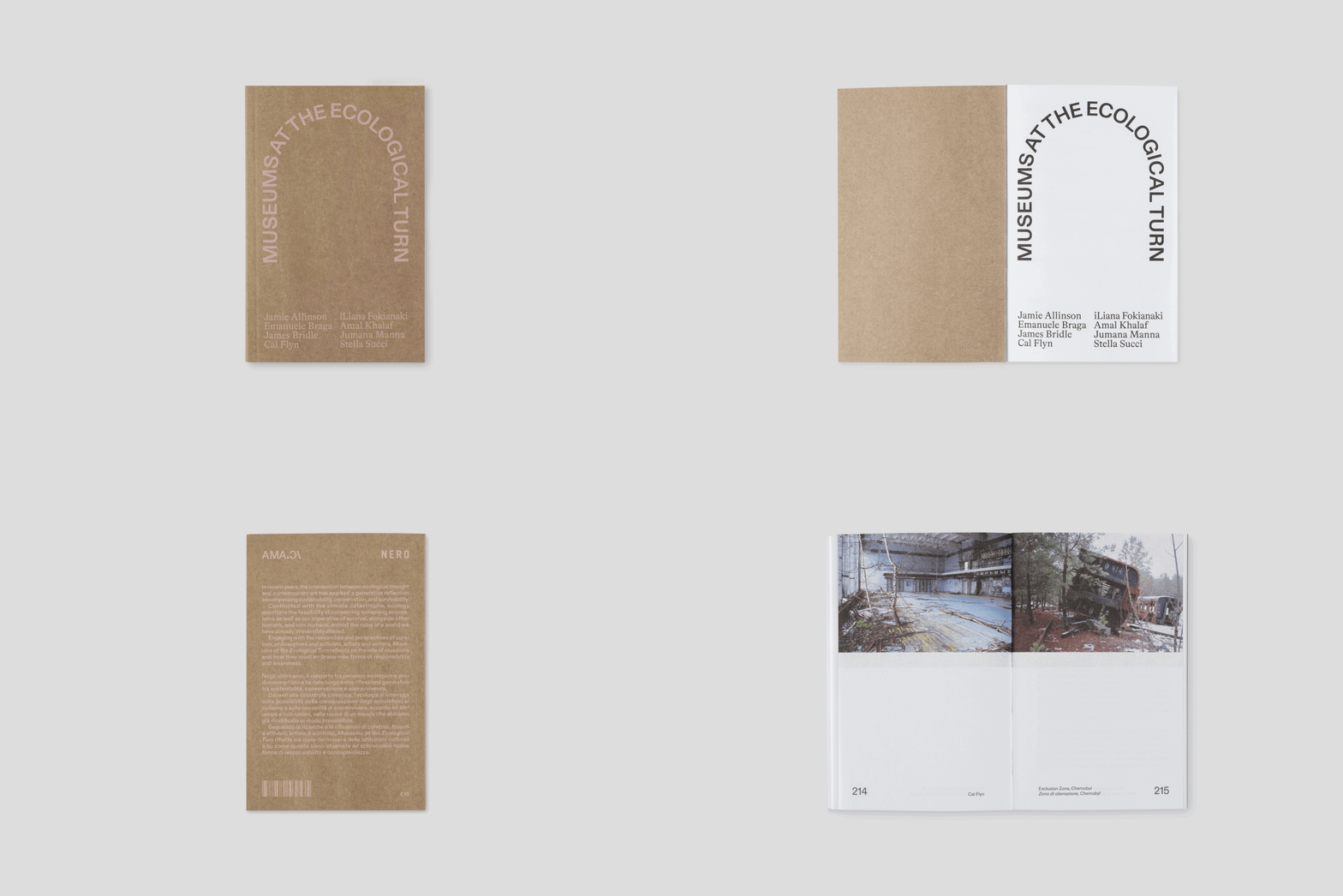
In recent years, the relationship between ecological thought and artistic production has given rise to a generative reflection on sustainability, conservation and survival. In the face of climate catastrophe, ecology grapples with questions about the possibility of preserving collapsing ecosystems and the need to survive, alongside other humans and non-humans, amid the ruins of a world we have already altered irreversibly. In November 2023, the second edition of the conference platform ‘Museo Ventuno’, Museums at the Ecological Turn | I Musei alla Svolta Ecologica – curated for AMACI by Caterina Riva together with NERO – brought together voices and perspectives from both within and beyond artistic institutions to capture and amplify the debate on these themes.
Reflecting on the role of museums and on how they must embrace new forms of responsibility and awareness, this publication gathers contributions from curators, philosophers and activists, artists and writers. The authors Amal Khalaf, iLiana Fokianaki, Stella Succi, Emanuele Braga, Jamie Allinson, James Bridle, Jumana Manna and Cal Flyn engage with the ethical and political duties and contradictions of artistic institutions, reflecting on the relationship between art and climate activism, on the fragility of our natural and cultural ecosystems and their need for preservation, and on the possibility of survival and regeneration.
Curator and artist Amal Khalaf highlights the interconnection of crises, from pandemics to climate collapse, from violence to the losses caused by war, as well as the fundamental role that art and culture must play in our survival. iLiana Fokianaki, curator and director of Kunsthalle Bern, reminds us that the structures and organisations we belong to must embrace complexity and undergo a cultural transformation that places an ethics of care at its centre. Art historian Stella Succi reflects on the meaning of acts of vandalism against artistic heritage, shedding light on their artistic and political complexity. Philosopher Jamie Allinson highlights how the museum system is founded on the same extractive logics and capital accumulation that contemporary art so often condemns. Emanuele Braga, philosopher and activist, seeks a mediation between the political and speculative dimensions of artistic practices. In the context of art and culture, cultivating ecological thought necessarily means opening oneself up to the possibility of contamination and change, an urgency explored by philosopher and artist James Bridle. Artist Jumana Manna delves into archives, questioning their colonial appropriation, and reflecting on how every act of conservation entails forms of erasure. Cal Flyn, journalist and writer, guides the reader through an exploration of territories now abandoned by humankind. In her text, she documents the effects of contamination and natural or nuclear disasters, while also highlighting the regenerative power of nature — of animals, plants and bacterial organisms that transform and adapt to survive even in inhospitable conditions.
Curatorial coordination is by Caterina Riva and Laura Tripaldi.
The volume Museums at the Ecological Turn | I Musei alla svolta ecologica is part of the project of the same name, realised on the occasion of Bergamo Brescia Italian Capital of Culture 2023, thanks to the support of Fondazione Cariplo, Fondazione della Comunità Bergamasca and the Municipality of Bergamo. GAMeC – Galleria d’Arte Moderna e Contemporanea di Bergamo is a project partner.