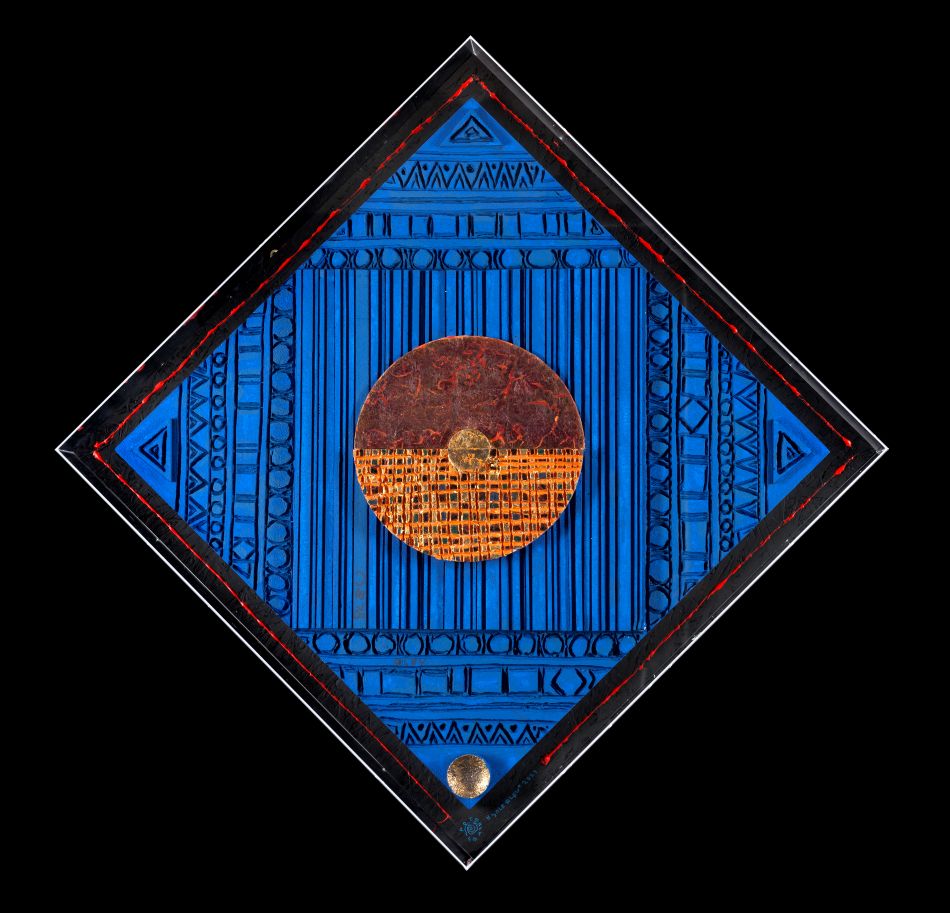
A Journey through the Creative Universe of the Great Venetian Sculptor, between Memory and Vision
Curated by Elisabetta Barisoni and Valeria Loddo
To mark Gianmaria Potenza’s 90th birthday, Ca’ Pesaro presents a new exhibition dedicated to the artist, in collaboration with the Potenza Tamini Foundation and curated by Elisabetta Barisoni and Valeria Loddo.
The exhibition explores the profound relationship between Potenza and Venice, a city that serves as the poetic, visual, and sensory foundation of his artistic practice. Io, Venezia is more than just a title: it is a declaration of belonging, the story of an unbroken dialogue with the lagoon city that runs throughout the artist’s entire body of work and fuels his imagination. Form, light, and matter are the three themes through which the exhibition unfolds, offering an interpretation of Potenza’s artistic practice.
The exhibition features 30 works created at various stages of the artist’s career, with a particular focus on works dating from the early 1990s onward—a period of full artistic maturity that marked a decisive renewal of his expressive language. Paintings and works on paper engage in a dialogue with works in wood, mosaics, and bronze sculptures, conveying the richness of his technical and material experimentation. The exhibition also includes three previously unseen bronze works—abstract pieces in which his experimentation with form becomes even more pronounced.
Form reveals the process of synthesis through which Potenza translates the Venetian landscape—both natural and architectural—into an essential language of geometries, volumes, and signs. Sunsets, reflections on the water, architecture, and horizons are transformed into circles, triangles, and squares in the Policombustioni, the Resinografie, the mosaics, and the sculptures, giving rise to compositions that condense perception and memory.
Light, a defining element of the lagoon, permeates the artist’s entire body of work and finds expression in his ongoing technical experimentation. In the mosaics, the tiles—arranged on their edges—create vibrant surfaces that capture and reflect the shimmer of the water; in the Resinografie, the chiaroscuro effects of pressed paper convey depth and movement, while polished bronze, gold leaf, and gilded tiles evoke the shifting luminosity of Venice.
Finally, matter itself becomes a realm of experimentation and invention. Wood, bronze, polystyrene, handmade paper, and mosaic coexist in a free yet rigorous exploration, in which each material contributes to the construction of the work. Color, too—with its intense shades of blue, green, red, and yellow—echoes the palette of the lagoon city, transforming each work into a visual, tactile, and sensory experience.